


 Amazing Race
 Choose Wisely
 Unlock the Box
 Mall Hunters
 Mission Impossible
 The Great Charity Race
 Clues to a Mystery


 Random Acts of Kindness

 Where in the World is the Crystal Snow Globe?
 The Big Escape
 Team Trivia
 The Feud
 Summer Olympics
 Winter Olympics
 Who Kidnapped Santa?





Corporate event team building activities: Where Social Scavenger fits
The tricky part of planning a corporate event isn’t finding entertainment. It’s choosing something coworkers can actively do together without making participation feel like another assignment. Social Scavenger offers city scavenger hunts, venue-based poster games, and live-hosted virtual games—different starting points for an offsite, annual meeting, retreat, or distributed-team gathering.
An organized game is worth considering when creating the activity would stretch your internal team. A hosted format is especially useful when the planner wants to participate rather than facilitate. DIY remains a sensible choice when someone has the time to design, test, and run a shared task. This guide compares both paths, including the support to confirm before booking.
Choose an activity around your team’s goal—not just the entertainment
Start with a sentence you can use to evaluate every option: “We want colleagues from different departments to make decisions together,” or “We want new remote employees to have a shared experience beyond status meetings.” That is more useful than a vague request for something fun.
The American Psychological Association’s workplace connection guidance recommends structured shared activities as one way to create opportunities for connection. Canadian Centre for Occupational Health and Safety guidance also includes volunteering, problem-solving games, and brainstorming. These recommendations support making room for interaction; they do not establish that a single event creates lasting belonging.
Quick activity comparison
The teamwork-focus suggestions below are editorial guidance, not evidence-based rankings. Participation demands, organizer tasks, and budget inputs should be checked against your actual group and chosen format.
- Activity: City scavenger hunt. Teamwork focus: Shared decisions and prioritization. Setting: Outdoor city area. Participation demands: Moving between locations and interpreting challenges. Organizer tasks: Check route suitability, weather arrangements, and meeting points. Budget inputs: Activity fee, transportation, refreshments, and contingency arrangements.
- Activity: Venue puzzle challenge. Teamwork focus: Comparing observations and combining ideas. Setting: Your event venue. Participation demands: Engaging with clues and creative tasks. Organizer tasks: Confirm setup, access, equipment, and facilitation responsibilities. Budget inputs: Game fee, shipping, venue needs, and equipment.
- Activity: Escape room. Teamwork focus: Sharing information. Setting: A separate provider’s venue. Participation demands: Puzzles and a potentially enclosed environment. Organizer tasks: Check access, room rules, capacity, and team organization. Budget inputs: Booking fees and transportation.
- Activity: Cooking class. Teamwork focus: Coordinating responsibilities. Setting: Teaching kitchen. Participation demands: Food handling and preparation tasks. Organizer tasks: Check dietary needs, supervision, and seated options. Budget inputs: Instruction, ingredients, space, and transportation.
- Activity: Volunteer shift. Teamwork focus: Working toward a shared contribution. Setting: Community organization’s site. Participation demands: Depend on the requested work. Organizer tasks: Confirm useful tasks, supervision, and participation requirements. Budget inputs: Transportation, requested supplies, and coordination time.
- Activity: DIY build-and-test challenge. Teamwork focus: Experimentation and iteration. Setting: Meeting room. Participation demands: Designing, assembling, observing, or documenting. Organizer tasks: Test materials and establish safe rules. Budget inputs: Supplies, space, and internal planning time.
- Activity: DIY smartphone photo story. Teamwork focus: Creative coordination. Setting: Office or event space. Participation demands: Photography, story development, or editing. Organizer tasks: Set privacy boundaries and sharing arrangements. Budget inputs: Device access, space, and planning time.
- Activity: Virtual mystery. Teamwork focus: Discussing interpretations. Setting: Online meeting. Participation demands: Following information and contributing to discussion. Organizer tasks: Confirm hosting, technical needs, and access arrangements. Budget inputs: Game fee and any additional technical support.
- Activity: Virtual game show. Teamwork focus: Shared participation. Setting: Online meeting. Participation demands: Depend on the selected game. Organizer tasks: Confirm content fit, response methods, and scheduling. Budget inputs: Game fee and any additional technical support.
- Activity: Cross-location storytelling. Teamwork focus: Listening and building on others’ ideas. Setting: Virtual or hybrid. Participation demands: Speaking, writing, or editing. Organizer tasks: Design the handoffs and give remote contributors equal access. Budget inputs: Meeting tools, equipment, and facilitation time.
In-person corporate event team building activities
1. City scavenger hunt
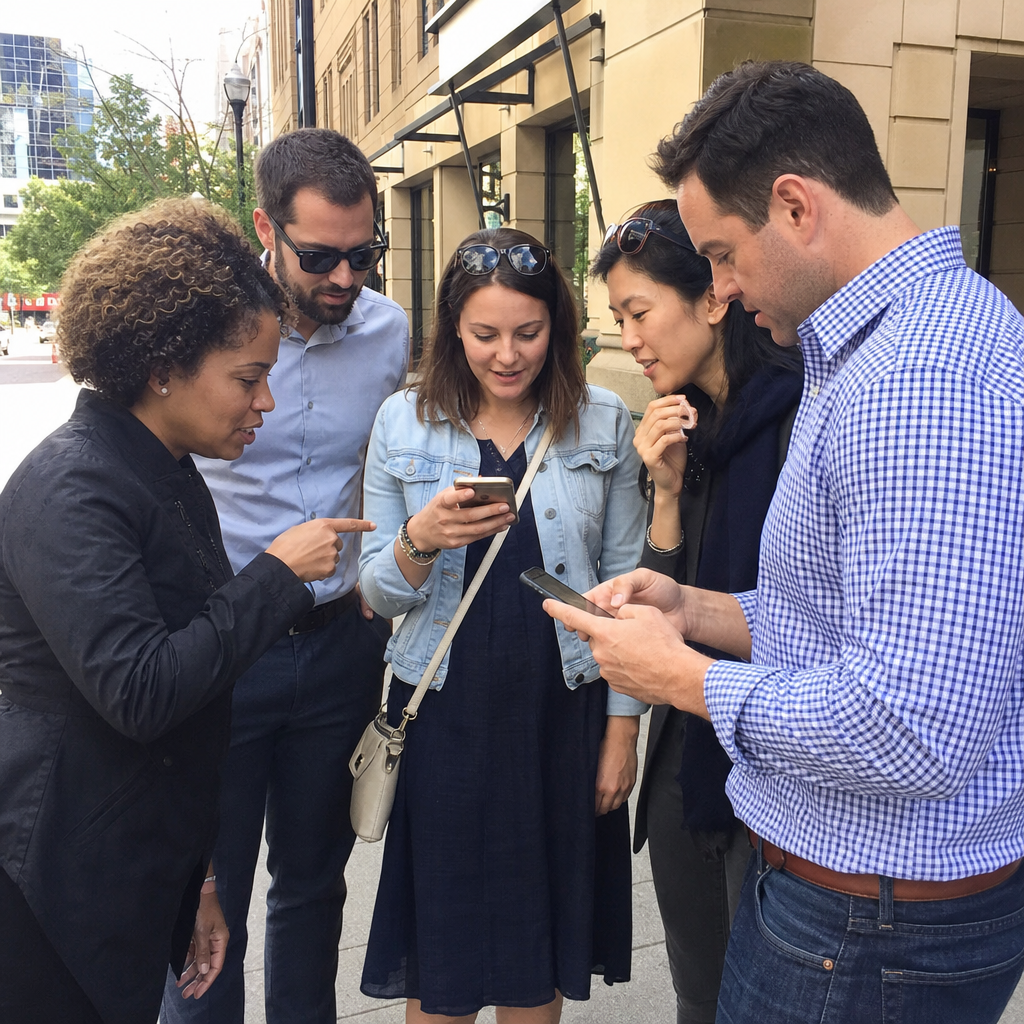
A city hunt gives coworkers a reason to leave the meeting room and make choices together. For an offsite, it can also make exploring the surrounding area part of the shared activity rather than an optional extra.
Social Scavenger’s Ultimate City Scavenger Hunt includes 45+ challenges in a walkable area, without enough time to complete everything. That creates a useful discussion theme: how does a team choose its priorities? Explore city scavenger hunts if you want an organized game built around that kind of choice.
Before booking, confirm the proposed route, weather arrangements, timing, device requirements, and hosting responsibilities. “Walkable” does not establish that a route suits every participant. In the debrief, ask how teammates balanced different preferences—not just how many challenges they completed.
2. At-your-venue puzzle challenge
Keeping the activity at your venue can simplify the agenda when you already have meeting space. Look for a format that gives teammates something to investigate and discuss, rather than another presentation to watch.
For Social Scavenger’s interactive poster games, the company prints and ships interactive posters to your venue. Teams uncover hidden clues, solve puzzles, and take on creative photo, video, and AI challenges before a leaderboard-and-slideshow reveal.
Poster production and shipping are specific pieces of preparation you would not need to create internally. However, confirm delivery timing, placement requirements, equipment, local setup, and who runs the activity and closing reveal. Do not assume on-site staffing is included. Ask how participation can be arranged for colleagues who prefer not to appear in photos or videos.
3. Collaborative escape room
An escape room from a separate provider is a generic alternative for a team that enjoys puzzles. Encourage people to share observations aloud so information does not stay with whoever discovers it first.
Check the venue’s access, sensory environment, exit rules, capacity, and arrangements for anyone who needs a break. Ask whether multiple rooms would split the group and how everyone can contribute. This is distinct from Social Scavenger’s venue-based poster format.
4. Cooking class with shared responsibilities
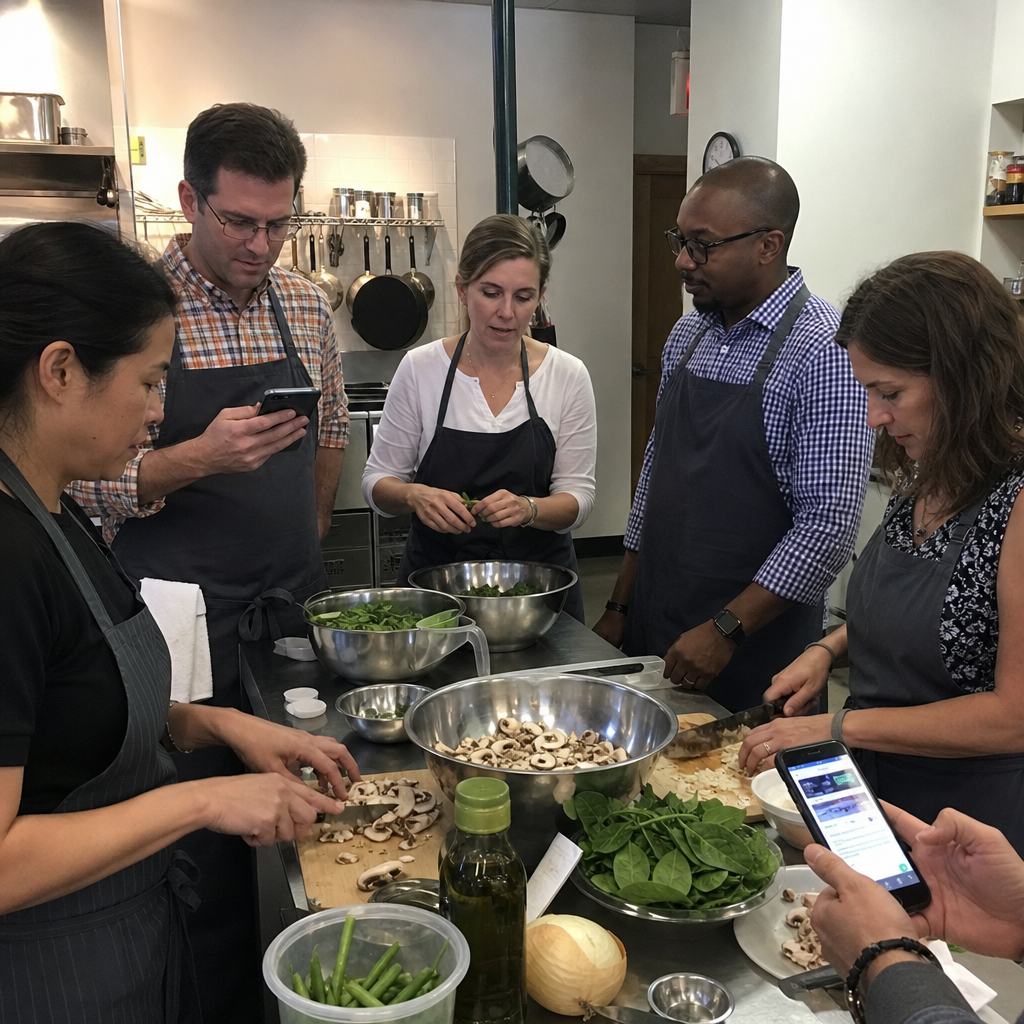
A cooking class can give teammates practical responsibilities that depend on one another. Ask the instructor to distribute preparation, measuring, timing, and presentation tasks rather than leaving most people watching one confident cook.
Confirm dietary requirements, allergies, food-handling expectations, seating, and access to work surfaces in advance. Let participants choose suitable responsibilities without having to explain personal needs to the group. This is a general activity idea, not a Social Scavenger offering.
5. Volunteer shift built around a community organization’s needs
Start by asking a community organization what work would genuinely help. A useful shift might involve sorting supplies or preparing materials, but the receiving organization—not the event agenda—should define the task.
Confirm supervision, training, physical demands, participation requirements, and any restrictions on photography. Budget for coordination and requested supplies rather than assuming volunteering is cost-free. Avoid turning the organization’s work or the people it serves into a competitive game.
6. Build-and-test team challenge
For a DIY activity, ask teams to create a simple tabletop structure from safe materials, test it against a clearly explained requirement, and improve the design. Give everyone the same constraints and a chance to revise.
Offer roles such as designer, assembler, observer, and recorder, with rotation where useful. Test the exercise beforehand, keep loads and structures small, and make sure work surfaces are accessible. Discuss what changed after the first test rather than treating the tallest structure as the only success.
7. Smartphone photo-story challenge
Another DIY option is to create an original, workplace-safe story using a short sequence of smartphone photos. For example, teams could illustrate a fictional object’s first day at the office.
People can contribute as photographers, writers, editors, or optional on-camera participants. Get permission before photographing anyone, keep confidential information out of the frame, and explain where images will be shared and stored. This proposed exercise is separate from Social Scavenger’s product formats.
Virtual and hybrid activities for distributed coworkers
Choose a format in which remote colleagues have a real task—not a livestream of an in-person group having fun. Gallup’s hybrid-work guidance emphasizes intentional collaboration and coordination. An event can be one opportunity for connection within that broader approach, not a substitute for clear expectations and effective management.
8. Live-hosted virtual mystery
A mystery gives colleagues a shared subject to discuss without requiring personal disclosures. As a selection criterion, look for opportunities to compare interpretations rather than having one person answer everything.
Social Scavenger’s live-hosted virtual team building games include mysteries, game shows, and creative challenges. The company hosts these virtual games so the organizer can play too—a concrete distinction from internally facilitating a DIY session.
Ask which mystery suits your group, how participation works, and what technical preparation is needed. Confirm timing, capacity, and accommodation arrangements rather than assuming all virtual formats have the same requirements.
9. Virtual team game show
A game show is another confirmed Social Scavenger virtual format to consider when your team would prefer a hosted game over a mystery. Ask about sample content, response methods, and how the selected format gives different colleagues opportunities to contribute.
Content fit matters for teams spanning countries, languages, and generations. Check whether the proposed game relies heavily on particular cultural references or fast responses. Live hosting does not remove the need to confirm those details before booking.
10. Cross-location collaborative storytelling
For a generic DIY hybrid exercise, give teams a fictional workplace-safe scenario and ask each location to contribute a section of the same story. Rotate who proposes ideas, records decisions, and shares the result.
Use a shared workspace that remote participants can access equally, and assign a facilitator to manage handoffs. Offer written contributions alongside spoken ones. This is a planning idea, not a verified Social Scavenger workflow or platform feature.
Plan the event so everyone has a meaningful way to participate
Check accessibility, comfort, and participation preferences
Ask about accommodation needs in the invitation and follow up individually. The Cornell accessible meeting checklist provides practical planning considerations for accommodation requests and venue assessment. Use it as guidance, not as a guarantee of accessibility or legal compliance.
- Review entrances, bathrooms, pathways, seating, lighting, acoustics, and access to working surfaces at the actual venue.
- Discuss dietary requirements, captioning, mobility access, breaks, and other requested arrangements with the relevant provider.
- Give teams understandable instructions and different ways to contribute. Mix departments where appropriate and rotate responsibilities without forcing unsuitable roles.
- Avoid compulsory personal disclosures, embarrassing performances, alcohol-dependent participation, and athletic speed as the default measure of success.
- For online participation, confirm connection requirements, equipment, response methods, and access arrangements before the event.
These are planning questions for every format. They are not claims that particular accommodations are included in a Social Scavenger booking.
Budget for the whole event and build a realistic schedule
Compare total event costs, not just the activity fee. Include venue needs, transportation, food, accessibility and accommodation arrangements, equipment, shipping where applicable, and internal planning time. US and Canadian planners should confirm the quote currency and applicable taxes or other charges.
An illustrative run of show is: arrival and access setup, briefing, shared activity, break, debrief, and departure. Assign actual timings after confirming the activity requirements, and leave room for transitions. This sequence is planning guidance, not a statement of Social Scavenger event durations.
For outdoor plans, establish who makes a weather decision and when. For shipped materials, confirm delivery and setup responsibilities. For virtual games, schedule any required technical checks and account for participants’ time zones.
Finish with a short debrief and useful feedback
Keep the conversation specific to what happened:
- What helped your team coordinate?
- Whose contribution did you notice that you might otherwise have missed?
- What would you change about the task or your approach next time?
Follow with a brief feedback check on participation, comfort, and usefulness. Use responses to improve the next event—not as proof that this one caused gains in retention, productivity, or mental health.
DIY vs. an organized Social Scavenger event
When an internally organized activity makes sense
DIY works best when an internal owner can handle activity design, materials, testing, facilitation, technical preparation, and wrap-up. A small tabletop challenge or photo story can be manageable when you already have suitable space and equipment.
Include that person’s time in the comparison. Someone must answer questions, resolve unclear instructions, support participation, and collect feedback. If the organizer also wants to join a team, decide who will take over those responsibilities.
Compare Social Scavenger formats and confirm what is included
Buying an organized format does not mean every service is identical. Compare the work each option takes off your internal team’s list—and the work that remains.
- City scavenger hunts: Consider the Ultimate City Scavenger Hunt’s 45+ challenges and built-in need to choose priorities. Confirm route details, hosting arrangements, timing, equipment, weather plans, and team organization for your booking.
- Interactive poster games: Printed and shipped posters, hidden clues, puzzles, creative challenges, and a closing leaderboard-and-slideshow reveal are confirmed. Ask who handles placement, setup, facilitation, technical preparation, and the reveal at your venue.
- Virtual team building games: Live hosting is confirmed for mysteries, game shows, and creative challenges. This is the clearest option here for an organizer who wants to play rather than host. Confirm the selected game, meeting setup, participation methods, and access arrangements.
The practical benefit is choosing support that matches your bottleneck: creating an activity, producing venue materials, or facilitating a virtual session. Do not assume universal full-service planning or all-inclusive pricing. A clear division of responsibilities is more useful than a broad promise of an effortless event.
Bring your group size, location, and goals to a consultation
To discuss your team event, bring your group size, location, goals, preferred date, and participation needs. Ask which format fits your setting and what your internal organizer would still need to manage.
Before committing, confirm date availability, capacity, timing, inclusions, accommodation arrangements, device requirements, pricing and currency, booking deadlines, and relevant cancellation or weather terms. Those answers make the comparison with DIY meaningful.
Frequently asked questions
What are the best corporate event team building activities for our team?
Choose by purpose and participation needs, not a universal ranking. A city hunt offers choices to discuss; a venue puzzle centers on shared observations; a hosted virtual game gives distributed colleagues a shared activity. Check the actual demands and support before deciding.
Which activities work with a limited budget?
A DIY build-and-test challenge, smartphone photo story, or collaborative story may be manageable using existing space and equipment. Count supplies, accessibility arrangements, and staff time. Compare that total with an organized option rather than assuming DIY is automatically cheaper.
How should we adapt activities for a large group?
Confirm capacity, space, facilitation coverage, and team organization for the specific format. Plan how everyone receives instructions, asks questions, moves through the space, and joins the wrap-up. Do not treat broad group-size marketing as confirmation for a particular booking.
How do we include remote coworkers and different participation needs?
Give remote colleagues an equally meaningful task and a clear way to contribute. Ask about individual needs privately, offer suitable responsibilities, and confirm the venue or platform arrangements. Social Scavenger’s live-hosted virtual formats are options to explore, but specific accommodations must be confirmed.
How much does an organized team-building event cost?
Request a quote for your group, location, format, and requirements. Compare activity fees, shipping, equipment, venue needs, transportation, applicable charges, and remaining internal work. Confirm whether the quote is in US or Canadian dollars; do not assume one format’s inclusions apply to another.
Ready to narrow the options? Bring your group size, location, and goals to a conversation about the right Social Scavenger format for your event.