
 Amazing Race
 Choose Wisely
 Unlock the Box
 Mall Hunters
 Mission Impossible
 The Great Charity Race
 Clues to a Mystery


 Random Acts of Kindness

 Where in the World is the Crystal Snow Globe?
 The Big Escape
 Team Trivia
 The Feud
 Summer Olympics
 Winter Olympics
 Who Kidnapped Santa?





The best employee engagement ideas for remote workers start with what employees are missing—not an empty slot on the social calendar. A team asking “Which deadline matters?” needs a decision. A team saying “We only talk during handoffs” may welcome an hour together. Those are different briefs.
Use the three listening questions, completed needs-to-actions table and two sample 30-day plans below to choose one realistic next step. One plan removes commitments. The other makes room for a shared game—and a dragon with unusually demanding hotel preferences.
Ask what is missing—not which event to book
Gallup’s engagement guidance addresses expectations, resources, recognition, supportive relationships and development. That is a useful reminder: employees’ needs extend well beyond opportunities to socialize.
Ask these questions through brief private replies or existing one-to-ones, rather than adding another compulsory meeting:
- Think of the last time your work stalled: what was unclear, what help was missing, or what competing commitment got in the way?
- What useful contribution from you or a teammate has gone unnoticed, and how would you prefer it to be acknowledged?
- For the next month, what would be most useful: fewer commitments, easier access to colleagues, shared social time, or a chance to learn something specific—and what would that look like?
Explain who will read replies and how themes will be shared. Do not promise anonymity that the process cannot provide. These are discussion prompts, not an engagement scoring system.
Check your interpretation with employees before acting. “We heard that changing priorities are the main problem. Is that right?” leaves room for correction—and for needs that differ from the majority’s.
Match the need to an action someone can own
| Need and employee signal | First action | Owner | Ask after 30 days |
|---|---|---|---|
| Unclear priorities “Everything is urgent.” | Agree up to three priorities, a visible not-now list and who resolves conflicting deadlines. | Manager and project leads | Which trade-offs are clearer? Where are instructions still conflicting? |
| Difficulty getting help “I don’t know whom to ask.” | Add a contact and backup for recurring blockers to the existing digital workspace. Agree response expectations within working hours. | Manager and work-area leads | Did your last request reach someone able to help? What delayed you? |
| Overlooked contributions “People see the launch, not the preparation.” | Give a specific thank-you explaining the contribution and its effect. Ask whether private or public acknowledgement is preferred. | Manager, informed by colleagues | What useful work is still missed? Did the acknowledgement feel appropriate? |
| Limited social connection “We barely know one another.” | Offer one protected, optional app-based shared experience after checking that employees want it. | Organizer for delivery; manager for capacity | Was this the kind of shared time you wanted? Would you choose it again? |
| Development needs “I want to learn, but there’s no time.” | Choose one relevant skill, a coach and two protected practice blocks on a real task. Remove work to make room. | Manager and employee | What did you practise? What feedback helped? What opportunity comes next? |
| Overload “Another invitation means more catching up.” | Remove a low-value commitment, defer or reassign work, and protect the released capacity. | Leader authorized to change scope | What actually came off your workload? Has something else filled the space? |
When needs overlap, address the work barrier first and keep the social invitation separate. A game should never be the route to obtaining necessary help or recognition. For appreciation, follow individual preferences rather than defaulting to a public spotlight—an approach Gallup also recommends.
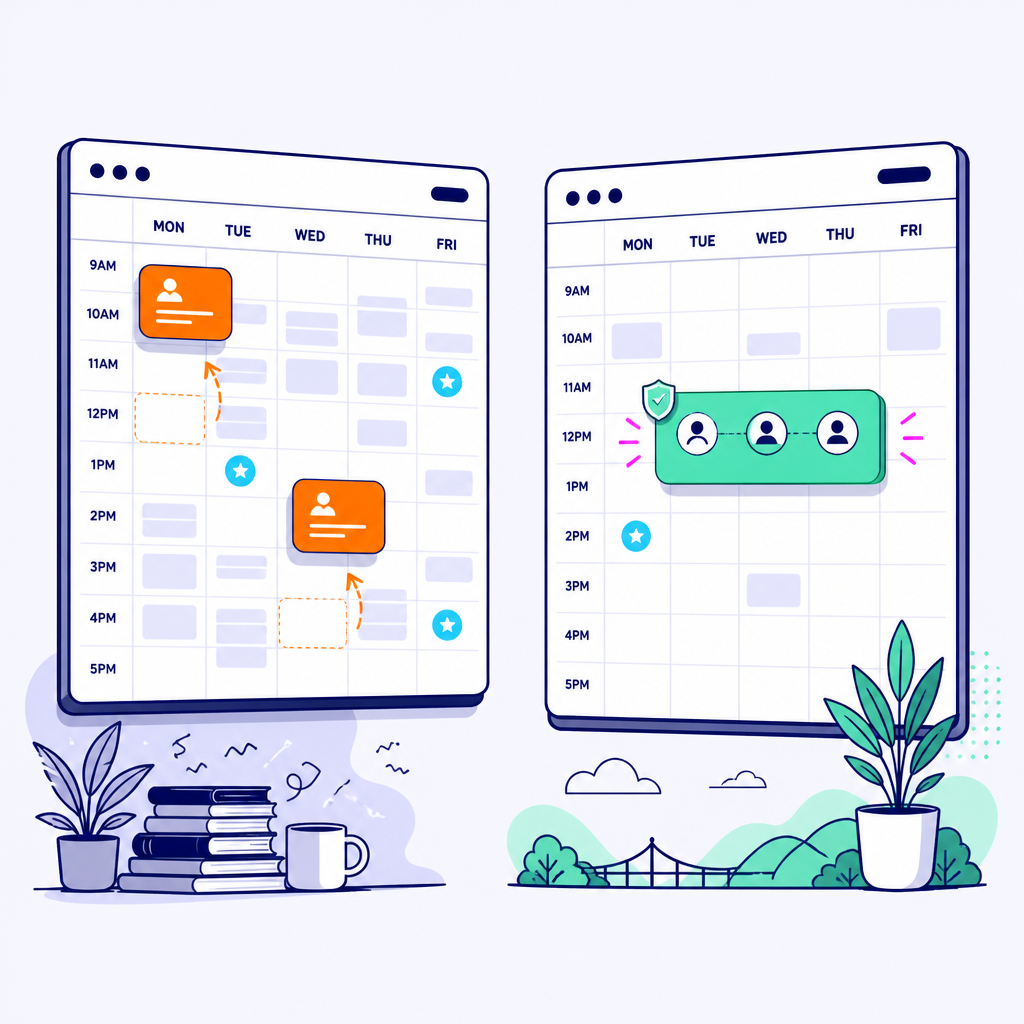
30 days for the overloaded team: take commitments away
Starting situation: a 12-person remote operations team reports conflicting priorities and too many status meetings. Colleagues already know one another; they are not asking for more social time.
Owner: the operations manager. Event decision: no additional team event this month. Keep useful one-to-ones and necessary coordination.
Days 1–7: listen, then remove something real
Use the three questions in existing conversations. Share the themes without identifying contributors and confirm the priority: workload and conflicting instructions.
The manager pauses a nonessential dashboard redesign and cancels two recurring 30-minute status calls whose information already exists in the project workspace. Do not replace them with longer written reports.
Days 8–14: make the trade-offs visible
Publish three current priorities: customer escalations, month-end reconciliation and required renewals. Put the dashboard redesign on the not-now list.
The manager resolves contradictory deadlines with project leads and adds a contact and backup for recurring blockers. Employees should not have to negotiate competing managers’ instructions themselves.
Days 15–21: check whether the space survived
Ask about one recent priority conflict and one request for help. Has another meeting quietly occupied the released hour?
If essential work still exceeds capacity, the manager changes scope, sequencing or staffing expectations—not the team’s morale-event schedule.
Days 22–30: report decisions, not just calendar changes
Revisit the original concerns. Report which commitments remain removed, which conflicts were resolved and what still needs escalation. Keep useful changes; give the remaining issue an owner and a next review on day 45.
Fewer meetings show that an action happened. Employees’ accounts tell you whether it helped.
30 days for the disconnected team: protect wanted shared time
Starting situation: a 16-person remote project team reports clear priorities and workable access to help, but little contact beyond handoffs. Employees want something playful together.
Owners: the manager protects capacity; an organizer coordinates delivery. This plan assumes budget, a suitable date and custom-production timing are agreed. If production cannot fit the month, move the event rather than squeeze preparation into evenings.
Days 1–7: confirm the invitation is wanted
Use the same listening questions. Offer an optional, no-preparation session during working hours and ask privately about access requirements and participation preferences.
People who decline do not owe an explanation. They must not lose access to work information or recognition.
Days 8–14: protect the hour and brief the experience
The manager defers a nonessential internal report for the month, arranges necessary coverage and protects one paid hour within participants’ local working hours. If there is no suitable shared window, explore separate sessions rather than asking one location to absorb an evening.
Brief a custom Social Scavenger virtual experience with varied puzzles, text-response challenges and a host-led read-out of team creations. For 16 participants, plan four teams of four; adjust to actual opt-ins.
Social Scavenger offers custom virtual stories and challenges, and its platform supports free-form text submissions. Include the text rounds and creative read-out in the agreed scope.
Most Social Scavenger virtual games run in a mobile or desktop browser, with one Tech Captain signing in per team. The virtual service includes setup, hosting, scoring and a finale; details vary by game.
Build meaningful participation choices into the brief. Arrange directly accessible digital prompts and needed captioning or communication support rather than relying only on screen sharing, following W3C’s accessibility guidance. Test the actual setup.
Days 15–21: give the team something ridiculous to solve
Allocate the hour: five minutes to join, five to practise a submission and understand points, 30 for varied challenges, 15 for the shared reveal and five to close.
Inside the challenge block, the app delivers this six-minute creative brief:
Your next hotel guest is a dragon who is afraid of heights, hoards pillows and sneezes sparks. Create a three-sentence hotel listing with a name, one irresistible amenity and one house rule that protects the other guests. Keep it under 50 words.
“Rooftop pool?” someone suggests.
“Afraid of heights,” a teammate points out.
Another offers a pillow vault. Suddenly the team is debating whether the pillows are amenities or assets under management.
Give everyone a minute to think, four minutes to combine and edit ideas, and a final minute for the Tech Captain to submit the agreed text through the game. Their listing reads:
Welcome to the Grounded Dragon Inn, where every suite is on the ground floor. Enjoy a private pillow vault and flame-toasted room service. Please sneeze only into the fireplace.
The joke improves because several people change it. Suggesting an amenity, catching a contradiction, editing and submitting all influence the result. This text-based round requires no acting, camera appearance or public pitch.
After submitting, teammates continue to the next app challenge. At the shared finish, the host reads selected listings: everyone discovers how differently the teams accommodated the same difficult guest. Keep the wider challenge mix varied so the hour does not become a writing contest.
The host handles scoring within the digital experience. Game standings belong to the game—not employee performance.
Days 22–30: ask what people want next
Invite a brief, optional reaction: “What made it easy or difficult to contribute, and would you want this kind of shared time again?”
Separately revisit employees’ work needs. The manager reports whether another session will be offered, changed or not repeated, and assigns any newly surfaced work issue to an owner. One enjoyable afternoon does not automatically justify a recurring invitation.
Attendance is not an engagement score
Enjoyable social time can be worthwhile because employees wanted it and enjoyed it. It does not need a productivity claim to justify its existence.
Keep three kinds of evidence separate:
- Attendance tells you who joined—not why others did not.
- Event satisfaction tells you how respondents experienced that session.
- Employee engagement concerns the wider relationship with work and the workplace. Gallup defines it around involvement and enthusiasm, not a temporarily happy afternoon.
Keep broader measurement within your organization’s engagement process. Neither game scores nor camera use establish commitment, and these plans do not demonstrate that a game improves retention. Thirty days is a review window, not a deadline for transforming engagement.
Finish with managerial follow-through. Gallup’s action-planning guidance supports choosing priorities, assigning responsibility and following up. Tell employees what you heard, what changed, what remains unresolved and who will report back when.
For one team, that means protecting an hour to invent a dragon hotel. For another, it means leaving an hour free. The useful next step is the one that answers the need—not the one that fills the calendar.