Great team building games give new colleagues a shared task, a reason to talk, and something useful to discover together. For interns, summer students, residents, and new hires, choose activities that help people meet coworkers, explore their workplace, or learn where to find support—not games that test knowledge they do not have yet.
Whether you are planning summer orientation, National Intern Day, or year-round onboarding, start with one clear goal. Below, you will find a Social Scavenger experience plus four DIY game ideas you can run yourself or use when discussing a customized event.
For larger cohorts, divide participants into small teams so everyone has a role. Where practical, mix new colleagues with established employees who can help them navigate the experience without taking over.
5 team building games for interns, summer students, and new hires
For the four DIY activities below, teams of three to five people are a useful starting point. The suggested times are planning estimates for those activities; confirm the duration, group setup, and customization options separately when booking a Social Scavenger experience.
1. Ultimate Scavenger Hunt
Best for: exploring the area around the workplace while getting to know colleagues.
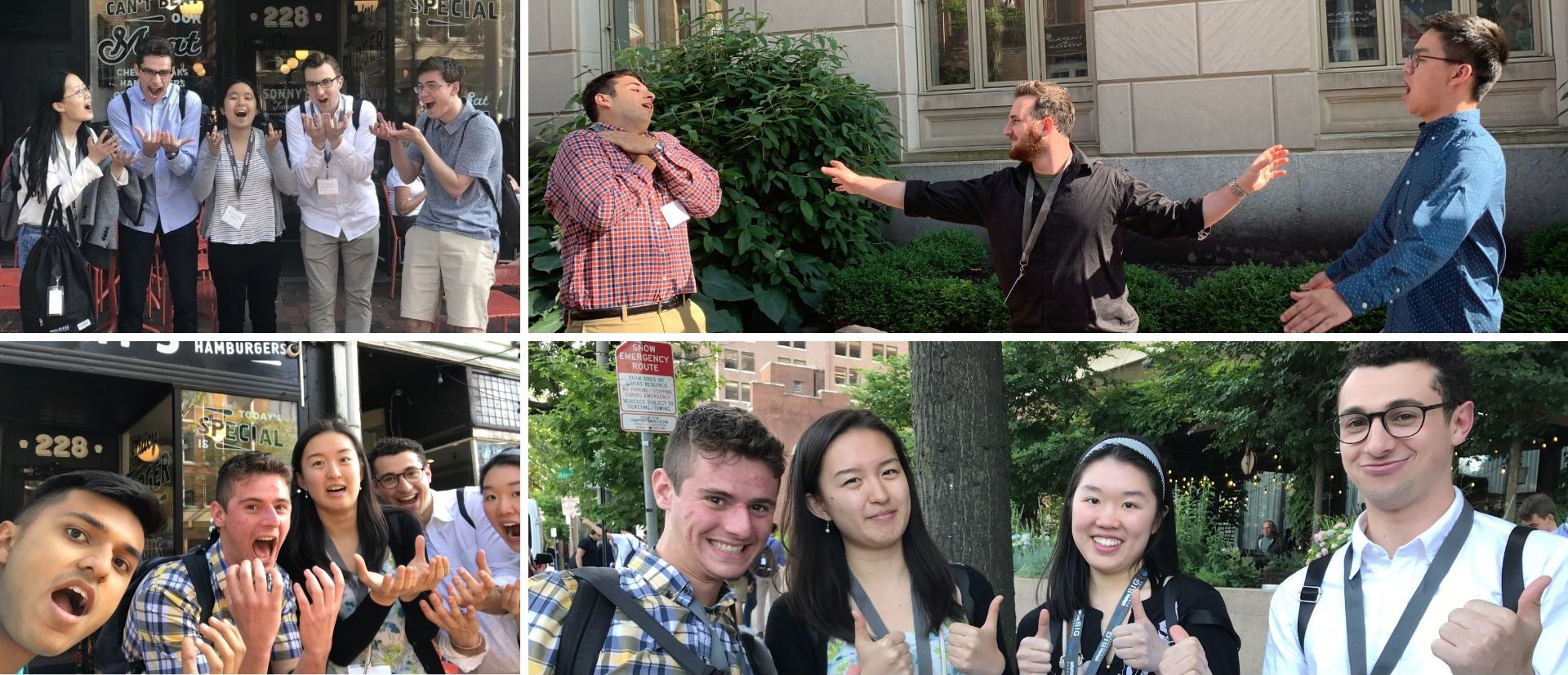
Social Scavenger’s Ultimate Scavenger Hunt gives new hires a shared way to discover local attractions and places near the office. The experience can be customized around your location and objectives, making it an option for a welcome event that goes beyond introductions in a meeting room.
When planning an onboarding hunt, explain which places you want participants to discover and what you want them to learn about one another. Ask which workplace-specific challenges can be included.
Sample challenge to discuss: solve a clue leading to an approved meeting point, then work together to describe the clearest route back to the office.
Best for: helping new colleagues learn their way around. Suggested time: 20–30 minutes.
Prepare five clues leading to approved shared spaces, such as a meeting room, break area, or employee support point. Check that every stop is accessible to participants.
Give each team a map or orientation guide. At each stop, ask them to answer a practical question using the information provided.
Award one point per correct answer, then review any confusing locations or procedures together.
Example prompt: “Find the guide to booking a meeting room. What is the first step?” Keep the task focused on finding help rather than remembering something from an earlier presentation.
3. Meet-your-teammates challenge
Best for: starting low-pressure conversations. Suggested time: 15–20 minutes.
Create a short list of work-related conversation missions: find a shared learning goal, exchange a useful work habit, or discover a skill someone would like to teach.
Have participants complete the missions within their small teams, with an optional second round that mixes the groups.
Give teams a point for each completed mission. Finish by inviting each group to share one useful connection or idea, with everyone’s permission.
Example prompt: “Find one skill two people on your team would like to learn this summer.” Make every prompt optional and avoid questions about age, family, finances, or other personal circumstances.
4. Company culture scenario challenge
Best for: connecting onboarding information to everyday decisions. Suggested time: 20–25 minutes.
Write three fictional workplace scenarios and provide a short values guide, resource list, and facilitator answer key.
Ask teams to choose a sensible next step and identify where they would find guidance. Treat the activity as open-book, not a company trivia test.
Award a point for each response supported by a relevant resource or clear explanation. Discuss alternative approaches during the wrap-up.
Example prompt: “You are unsure which task should come first. Who could you ask, and what information would help that conversation?” Use the discussion to clarify expectations, not evaluate individual new hires.
5. Virtual welcome scavenger hunt
Best for: remote interns and colleagues joining from different locations. Suggested time: 20–30 minutes.
Prepare a shared clue sheet using approved onboarding materials that every participant can access.
Have small groups find practical resources, such as the IT help process, an internal glossary, or the team’s meeting guide. They can collaborate in a call or shared document.
Award one point for each correct answer. End with a creative challenge: write a three-sentence welcome tip for the next person joining the team.
Keep the hunt focused on shared work resources rather than home tours or personal possessions. If you prefer an organized event, explore Social Scavenger’s virtual team building games and discuss your onboarding goals.
Make the games welcoming for everyone
The best choice is not necessarily the most competitive one. New colleagues need clear instructions and ways to contribute that do not depend on confidence, mobility, or existing company knowledge.
Explain the purpose, rules, boundaries, and finish time before starting.
Offer different roles, such as clue reader, navigator, note-taker, or spokesperson. Let participants choose or rotate roles.
Check routes and materials for accessibility, and provide an equivalent seated or remote option where needed.
Make personal sharing and appearing in photos optional. Avoid tasks that require approaching strangers or entering restricted areas.
Reward collaboration and thoughtful answers rather than physical speed. Keep prizes and scoring lighthearted.
Provide the same background materials to everyone so established employees do not have an automatic advantage.
A sample 60-minute welcome session
For a short DIY event, choose one activity rather than trying to fit in every game.
10 minutes: welcome participants, introduce teammates, explain the activity, and check access needs.
30 minutes: play the game, with a facilitator available for questions.
15 minutes: compare discoveries and discuss what participants learned.
5 minutes: recap useful resources and explain the next onboarding step.
Close with a practical question: “What did you discover today that will make your first few weeks easier?” This connects the game to the rest of the onboarding experience.
Plan your new-hire team event with Social Scavenger
Social Scavenger offers customizable team experiences for welcoming interns, summer students, residents, and new employees. Explore in-person team building games or discuss a virtual format for colleagues joining from different locations.
When you get in touch, share your headcount, preferred date, location or remote setup, available time, and accessibility requirements. Most importantly, identify your main goal: helping people meet, learn their surroundings, or connect with your company culture.


 Amazing Race
 Choose Wisely
 Unlock the Box
 Mall Hunters
 Mission Impossible
 The Great Charity Race
 Clues to a Mystery


 Random Acts of Kindness

 Where in the World is the Crystal Snow Globe?
 The Big Escape
 Team Trivia
 The Feud
 Summer Olympics
 Winter Olympics
 Who Kidnapped Santa?